

History
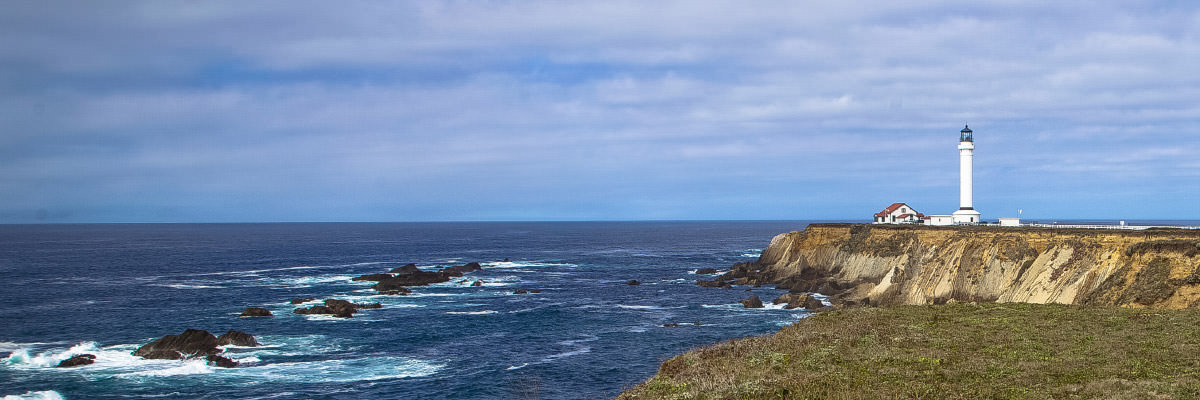
Designation of Greater Farallones National Marine Sanctuary
In January, 1981, the U.S. Congress designated Greater Farallones National Marine Sanctuary (GFNMS), part of the National Oceanic and Atmospheric Administration (NOAA), under the authority of the National Marine Sanctuaries Act. Congress recognized the need for federal protection of these waters, adjacent to San Francisco, for their biological richness, unique habitats, threatened and endangered marine life, shipwrecks and other cultural resources.
2022
Greater Farallones National Marine Sanctuary embarks on significant bull kelp restoration effort in partnership with Greater Farallones Association.
Greater Farallones and Cordell Bank National Marine Sanctuaries host the Beyond the Golden Gate Research Symposium with partners bringing together scientists and researchers to share the latest findings and explorations in local estuarine and ocean waters.
Visitor Center on Crissy Field reopens and in person education programming restarts.
Greater Farallones and Cordell Bank National Marine Sanctuaries celebrate the 50th anniversary of the Office of National Marine Sanctuaries with volunteers, national marine sanctuary leadership, and partners.
Greater Farallones and Cordell Bank National Marine Sanctuaries are featured in the Office of National Marine Sanctuaries US Postal Stamp Series commemorating the 50th anniversary of the Office of National Marine Sanctuaries.
2021
Greater Farallones National Marine Sanctuary (GFNMS) Superintendent Maria Brown becomes superintendent of neighboring Cordell Bank National Marine Sanctuary (CBNMS). Sanctuary staff from both sanctuaries are brought together to work as one team to take care of both GFNMS and CBNMS.
Blue Carbon in Marine Protected Areas: Part 1: A Guide to Understanding and Increasing Protection of Blue Carbon and Part 2 A Blue Carbon Assessment of Greater Farallones National Marine Sanctuary published to the Office of National Marine Sanctuaries Conservation Series.
Sara Hutto, NOAA affiliate moderates and presents at COP26 Ocean and Climate Ambition: International Partnership for Marine Protected Areas, Biodiversity and Climate Change in Glasgow, Scotland.
Characterization of Deep-Sea Coral and Sponge Communities in Greater Farallones National Marine Sanctuary: Point Arena South Essential Fish Habitat Conservation Area and New Amendment 28 Areas Conservation Series Report publishes in the NOAA National Marine Sanctuary Conservation Science Series.
Cordell Bank National Marine Sanctuary recognizes Nola Schoder as Volunteer of the year for the sanctuary and is recognized by the National Marine Sanctuary Foundation at Capitol Hill Ocean Week where volunteers are recognized around the sanctuary system.
2020
COVID shuts down office and visitor center in March 2020. The sanctuary launches virtual visitor center field trips, tours of the sanctuary, volunteer trainings, sanctuary advisory council meetings, and public programs.
Dick Ogg is recognized as Cordell Bank National Marine Sanctuary Volunteer of the Year by Cordell Bank National Marine Sanctuary.
New Species of Sponge is discovered and identified in Cordell Bank National Marine Sanctuary.
2019
Beach Watch celebrates 25 years of coastal monitoring. This long-term shoreline monitoring program, extended northward with the sanctuary expansion in 2015, provides continuous data for effective resource protection. Data identify changes in ocean conditions, and inform conservation efforts.
Using data from the sanctuary’s deep-sea investigations, the Pacific Fishery Management Council protects 261 miles of coral.
GFNMS launches the Greater Farallones National Marine Sanctuary Naturalist Course to train professionals and members of the public about science, natural history, interpretation of the sanctuary.
To enhance shoreline resilience, the sanctuary publishes a Coastal Resilience Sediment Management Plan for North-central California, with strategies to reduce impacts of storm surge, sea level rise, erosion, flooding, and human impacts and launches the North Central California Coast Sediment Coordination Committee.
GFNMS participates on an MPA and Climate Change panel hosted by the Chilean government at the 26th Conference of Parties (COP) on Climate Change in Madrid, Spain. Dubbed the “Blue COP” because of the focus on the ocean’s role in climate change.
Maria Brown, superintendent of Greater Farallones and Cordell Bank National Marine Sanctuaries, represented NOAA at COP25 and was part of the creation of the International Partnership.
2018
The Greater Farallones Association’s publishes a North-central California Kelp Restoration Plan for the Greater Farallones National Marine Sanctuary and California Department of Fish and Wildlife based on the recommendations from the Sanctuary Advisory Council. The plan guides restoration of the bull kelp forests in the sanctuary.
Greater Farallones Sharktoberfest celebrates the white sharks’ annual fall return to local waters. Lectures, exhibits, hands-on activities, games, live sharks, and art projects reinforce sharks’ importance in a healthy ecosystem.
2017
The Farallones sanctuary removes scores of illegal moorings, docks and vessels from Tomales Bay, a United Nation’s Wetlands of International Importance. The action promotes improved water quality, and protects seagrass habitat. Vessels moored in Tomales Bay now require insurance and mooring leases.
2016
The wreck of the USS Conestoga, which lies in the sanctuary three miles east of the Farallon Islands, is officially listed in the National Register as a Site of National Significance.
With the expansion of the sanctuary, the non-profit Farallones Marine Sanctuary Association changes its name to Greater Farallones Association. It continues to partner with the sanctuary on Beach Watch, as well as support several sanctuary programs.
Aboard the Exploration Vessel Nautilus, Greater Farallones, California Academy of Sciences, and Ocean Exploration Trust scientists discover two new sponge species on the wreck of the USS Independence in the Monterey sanctuary.
The Farallones sanctuary completes its Climate Action Plan to identify climate vulnerabilities and develop climate-smart management responses, and enhance ecosystem resilience.
Office of National Marine Sanctuaries and California State Parks archaeologists and divers explore the remains of 11 Sonoma coast lumber ports, known as “doghole ports.” These shared archaeological resources, including shipwrecks, have been proposed for the National Register of Historic Places.
Greater Farallones and Cordell Bank National Marine Sanctuaries celebrate the dedication and grand opening of the Ocean Exploration Center featuring the sanctuaries at Point Reyes National Seashore Lighthouse Visitor Center.
Benthic Characterization of Deep-Water Habitat in the Newly Expanded Areas of Cordell Bank and Greater Farallones National Marine Sanctuaries publishes in the Office of National Marine Sanctuaries Conservation Series.
2015
On June 19, 2015 the expansion of the Farallones National Marine Sanctuary northward to Manchester Beach in Mendocino County becomes effective increasing the area of protection to 3,295 square miles and eliminating the threat from petroleum development. Administrative and regulatory changes also take effect for the entire sanctuary. The sanctuary’s name is officially changed to Greater Farallones National Marine Sanctuary.
California's North-central Coast and Russian River Watershed is designated a priority landscape under President Barak Obama's Resilient Lands and Waters Initiative. This is designed to benefit natural resources and showcase the benefits of landscape-scale management approaches to address climate change.
The sanctuary climate efforts are highlighted as a case study by the United Nations Framework Convention on Climate Change during COP 21. At CPO 21 NOAA Administrator, Dr. Sullivan uses the sanctuary’s climate work as an example of NOAA’s efforts to address climate change in the marine environment.
2013
NOAA, on behalf of the Farallones and Cordell Bank sanctuaries and with the support of the United States Coast Guard, persuade the International Maritime Organization to adjust the vessel traffic lanes approaching San Francisco Bay to reduce ship collisions with endangered and threatened whales. Effective June 1, the shipping lanes are narrowed and extended further offshore. Reducing the co-location of whales and large vessels by 60%.
The Farallones sanctuary in partnership with the California State Lands Commission publish the Tomales Bay Vessel Management Plan, to improve water quality and protect sensitive eelgrass and essential fish habitat.
Farallones sanctuary and partners host the third sold out Biennial Ocean Climate Summit and publicly release Our Coast Our Future, an online sea level rise decision support tool for resource managers as well as the Climate Indicators for the North-central California Coast and Ocean.
Data from the LiMPETS student intertidal monitoring help to document an unprecedented sea star die-off in sanctuary waters and throughout the Pacific Coast.
Gulf of the Farallones and Cordell Bank Sanctuary Advisory Councils’ publish Ocean Climate Indicators: A Monitoring Inventory and Plan for Tracking Climate Change in the North-Central California Coast and Ocean Region.
Researchers using a remotely operated vehicle, discover a new deep sea coral species in the sanctuary, Swiftia farallonesica.
The sanctuary releases the draft White Shark Programmatic Environment Assessment for public comment. The sanctuary is a destination feeding ground during the fall for adult and sub-adult white sharks that visit seasonally to feed on marine mammals.
Seabird Protection Network: A Guide for Establishing New Chapters publishes in the Office of National Marine Sanctuaries Conservation Series.
Cordell Bank National Marine Sanctuary celebrates the grand opening of the Natural Sciences Gallery at the Oakland Museum of CA where a 3000 square foot gallery opened with exhibits for the visitors to engage and learn about the mysterious Cordell Bank.
2012
NOAA issues a Notice of Intent for the proposed northward expansion of the Farallones and Cordell Bank sanctuaries along the Sonoma and Mendocino county coasts. This launches a series of public scoping meetings, the first step in securing protection for one of the richest upwelling system on the U.S. West Coast.
NOAA issues a Notice of Intent for the proposed inclusion of the waters extending from Point Bonita to Point San Pedro as part of the Monterey Bay National Marine Sanctuary. This launches a series of public scoping meetings.
Farallones sanctuary with partners explore and document rare deep water coral and sponge habitats in the sanctuary discovering new species and new habitat.
The Farallones and Cordell Sanctuary Advisory Councils’ jointly publish Vessel Spill Response Technologies Report recommending best management practices for cleaning up oil spills.
The Farallones and Cordell Sanctuary Advisory Councils’ jointly publish Vessel Strikes and Acoustic Impacts Report recommending actions to protect endangered and threatened whales in the sanctuaries.
2011
The sanctuary, in partnership with the US Fish and Wildlife and Point Blue Conservation Science establish the Bay Area Ecosystem Climate Change Consortium to coordinate and partner on climate change adaptation planning along the coast and bay.
The Seabird Protection Network, working closely with airport managers and the Federal Aviation Administration, achieve an unprecedented 100% success in preventing seabird displacement at the 2011 Pacific Coast Dream Machine Air Show.
Climate Change Impacts: Gulf of the Farallones and Cordell Bank National Marine Sanctuaries: Report of a Joint working Group of the Gulf of the Farallones and Cordell Bank National Marine Sanctuaries Advisory Councils publishes in the Office of National Marine Sanctuaries Conservation Series.
2010
Gulf of the Farallones and Cordell Bank Sanctuary Advisory Councils’ jointly publish a Climate Change Impacts report for the North-central California coastal region.
The Gulf of the Farallones National Marine Sanctuary Ocean Climate Center opens, to facilitate the exchange of technical, scientific, policy and educational information on climate change adaptation and mitigation strategies in marine protected areas.
The sanctuary works with the California Department of Fish and Game to establish seven special closures around sensitive coastal mainland and island seabird breeding and roosting sites.
The sanctuary releases its first comprehensive Condition Report on the status and health of its biological and maritime cultural resources. This report will guide future management actions to maintain and improve the health of the sanctuary.
The Command and Torch Trustee Councils expand the Farallones sanctuary-led Seabird Protection Network to other sites along the coast of California to protect rookeries to the north and south of the Farallones region.
To build public awareness of the region’s wildlife and diverse habitats, the sanctuary installs 17 interpretive trail signs at Fitzgerald Marine Reserve in San Mateo County. Twenty-five new docents are trained, to provide personalized tours for over 100,000 students and families annually.
Marin County and the Farallones Association establish an ongoing partnership to remove invasive species and to restore native plants, to enable Kent Island to function once again as a dynamic flood shoal island in Bolinas Lagoon.
2009
The sanctuary secures support of the fishing and wildlife conservation communities and others in opposing the harvest of krill, a keystone species of marine zooplankton that forms the base of the food web.
The Farallones Beach Watch online query system goes public, allowing conservation, resource protection, education and management staff, as well as the public, near real-time access to Beach Watch data.
The sanctuary publishes its Green Operations Plan as a model for other sanctuaries. The sanctuary Green Team implements 80% of the Green Operations Action Plan Strategies, and reduces the site’s carbon emissions by 0.83 metric tons carbon dioxide equivalent per person.
In partnership with the California Academy of Sciences, the sanctuary trains over 500 volunteers to educate Steinhart Aquarium visitors about rocky intertidal habitats and creatures. They also launch the Duxbury Reef Rocky Shore Naturalist Program, a volunteer effort to study and reduce human impacts on popular Duxbury Reef.
Cordell Bank National Marine Sanctuary completes and archives oral history interviews with divers of Cordell Expeditions, a group of intrepid divers whose exploration led to the designation of Cordell Bank National Marine Sanctuary.
2008
The California Academy of Sciences' Steinhart Aquarium partners with the sanctuary on a major exhibit on the region's sanctuaries and highlights the Gulf of the Farallones ecosystem.
The sanctuary advisory council releases the Bolinas Lagoon Ecosystem Restoration Plan, which includes recommendations for restoration and management of the Wetlands of International Significance.
The sanctuary hosts the first Biennial Ocean Climate Summit bringing together resource managers, scientists, and educators to learn about the impacts of climate change to the ocean and develop a call for action.
The sanctuary releases its revised Management Plan containing new regulations to protect white sharks, water quality, eelgrass beds, and reduce wildlife disturbance.
2007
On Nov 7, the freighter Cosco Busan leaks over 53,000 gallons of oil into San Francisco Bay, and into the Gulf of the Farallones and Monterey Bay National Marine Sanctuaries. Beach Watch data is used by the sanctuary to secure cleanup of effected sanctuary beaches. The sanctuary actively engages in response and damage assessment.
2006
The sanctuary participates in one of the largest multi-agency oil spill drills of its kind, "Safe Seas 2006," simulating an oil barge spill just outside the Golden Gate. The exercise evaluates agencies' response readiness, assesses resources, and explores opportunities for improved response capacity.
The sanctuary publishes Socioeconomic Profile of Fishing Activities and Communities Associated with the Gulf of the Farallones and Cordell Bank National Marine Sanctuaries prepared by Ecotrust.
The sanctuary and the Environmental Protection Agency successfully settled with Dutra Dredging, one of the largest dredging companies in the state, securing $750,000 dollars in fines for spilling dredged material into sanctuary waters.
Cordell Bank National Marine Sanctuary launches the Ocean Currents radio program on KWMR, Community radio for West Marin featuring local ocean topics and issues facing the National Marine Sanctuaries. The program ran for 16 years.
2005
Three years after the removal of 100,000 gallons of oil from the leaking shipwreck Jacob Luckenbach, the Farallones’ Beach Watch shoreline monitoring efforts document a 160% decrease in oil pollution, down from peak 1997-1998 rates.
The Seabird Protection Network is established to protect nesting colonies along the California coast from boater, pilot, and hiker disturbances. Major funding is from the S/S Jacob Luckenbach and 1998 T/V Command oil spill incidents.
2004
The Farallones and Cordell Bank sanctuaries join with Point Blue Conservation Science in Applied California Current Ecosystem Studies (ACCESS) partnership to document the distribution, abundance, and demography of marine wildlife in the context of physical and oceanographic processes. Data inform resource managers, policy makers, and other conservation partners.
The sanctuary launches At Your School, with a Sharkmobile program to educate 4th-6th grade students about shark biology and conservation issues. At Your School expands to include the Crab Cab, and Seabird Shuttle – a 3rd to 5th grade curriculum on natural history, marine food webs, and seabird protection.
2002
The Sanctuary Advisory Council, comprised of constituents representing education, maritime activities, research, conservation, coastal communities, and other state and federal agencies is established to provide advice and offer perspectives to sanctuary management, and convey information about the sanctuary to the community.
The United Nations designate Tomales Bay as the second Ramsar Site - a Wetland of International Importance in the sanctuary. This marine-coastal wetland of eelgrass beds and tidal marshes provides year-round habitat for threatened and endangered species and is an important migratory stopover, seasonally hosting over 20,000 water birds annually.
Tar balls collected by the sanctuary's Beach Watch program provides evidence identifying the source of "mystery" oil spills as the S/S Jacob Luckenbach. The sanctuary assists the U.S. Coast Guard and other agencies in removing approximately 100,000 gallons of oil from the sunken vessel.
2001
To prevent wildlife disturbance, NOAA prohibits the operation of motorized personal watercraft (e.g., Jetskis ™) within Farallones marine sanctuary boundaries.
2000
The sanctuary’s Joint Management Plan Review with two adjacent sanctuaries, Monterey Bay and Cordell Bank begins, addressing current and emerging issues such as wildlife disturbance, invasive species, water quality, impacts from fishing and from oil spills.
Gulf of the Farallones sanctuary transfers $4.3 million in settlement funds from illegal dumping to the National Park Service to help acquire the 562-acre Waldo Giacomini Ranch for the purpose of restoring the Tomales Bay wetlands.
The nonprofit Farallones Association initiates education programs such as Farallones Visitor Center school programs. A high school intertidal monitoring program is established at Duxbury Reef, which will later evolve into the Long-term Monitoring Program and Experiential Training for Students (LiMPETS).
1999
The sanctuary begins to coordinate the North-central California harbor seal census with the Pt. Reyes National Seashore and other county and state parks.
The Farallones Association initiates a Responsible Wildlife Viewing program to educate boaters how to view wildlife without disturbing seals and other sensitive marine life.
The National Marine Sanctuary System and The National Geographic Society launch the Sustainable Seas Expedition at the Farallones sanctuary. The major thrust of the program is education and testing submersible research methods throughout the national marine sanctuaries.
The sanctuary and Farallones Marine Sanctuary Association co-sponsor a major outreach fair, Ocean Fest, launching a local, sustainable seafood movement and drawing between 4,500 people.
1997-1998
During high seas events, “Mystery” tarballs wash ashore at Point Reyes National Seashore, source unknown. Later, Beach Watch survey samples, using gas chromatography, are used to trace the tar balls to leaks from the SS Jacob Luckenbach shipwreck 17 miles west of the Golden Gate.
1996
The first northern fur seal pup birth in over 170 years is recorded on Maintop Island, South Farallon Islands. This marks the reestablishment of their former breeding rookery wiped out by fur hunters and other human impacts.
The multi-agency Common Murre Restoration Project begins efforts to re-establish a Common Murre and cormorant colony at Devil's Slide Rock, devastated by the 1986 T/V Apex Houston oil spill. Following a ten-year hiatus in breeding, use of social attractants result in murres successfully fledging chicks in the project’s first year
Beach Watch surveyors are instrumental in the response to the tanker Cape Mohican incident in which oil leaked from the dry dock into San Francisco Bay subsequently into the Monterey Bay and Gulf of the Farallones sanctuaries.
The SEALS citizen science program is established to reduce impacts from human activities on harbor seals in Tomales Bay and Bolinas Lagoon. By 1999, disturbances by clam diggers at Tomales Bay during pupping season are nearly eliminated, and by 2005, the seals' 15-year decline in pup survival is reversed.
1995
The non-profit Farallones Marine Sanctuary Association (FMSA) is established to support the work of the national marine sanctuary program.
Rocky intertidal monitoring of marine invertebrate and algae species commenced at seven mainland sites. Findings would be compared with sites at the South Farallon Islands, devoid of human impacts.
1994
Bolinas Lagoon is cleared of toxic waste and landfill with funds recovered from the illegal dumping of roadway debris from the 1989 Highway 1/Stinson Beach landslide.
1993
The sanctuary establishes Beach Watch, the first formal “citizen science” volunteer program within the National Ocean Service and Office of National Marine Sanctuaries.
In a joint cooperative research project with other agencies, and employing new technology, scientists locate and photograph barrels in situ containing radioactive waste on the sea floor.
1992
The sanctuary initiates long-term assessment and monitoring of rocky intertidal habitats on the South Farallon Islands, and assists the California Department of Fish and Game with abalone tagging and monitoring.
The sanctuary participates in a multi-agency cruise to sample sediments and long-lived fish at a shallow-water radioactive waste dump-site located in the Gulf of the Farallones.
The sanctuary relocates to the historic Coast Guard Lifesaving Station on Crissy Beach in the Presidio, whose size and location will enable classroom and field educational programs to be conducted on site, with capacity to develop a visitor center.
Upon designation of the Monterey Bay National Marine Sanctuary, the Farallones sanctuary is delegated management responsibility for its northern section, from Rocky Point in Marin County south to Point Año Nuevo at the San Mateo/Santa Cruz County border.
1991
The sanctuary is delegated management responsibility for the recently designated (1989) Cordell Bank National Marine Sanctuary.
1990
A proposed City of Santa Rosa project to discharge sewage and wastewater into the marine sanctuary via the Esteros, Spanish for estuary, is halted.
1989
The United Nations designates the Farallones sanctuary as part of the Golden Gate Biosphere, recognizing it as part of an internationally important ecosystem.
The Loma Prieta earthquake triggers a landslide closing Highway 1 near Stinson Beach. Road crews illegally dump debris into sanctuary waters. Five years later the south end of Bolinas Lagoon would be cleared of toxic waste as mitigation for the dumping impacts.
1987
The renamed Gulf of the Farallones National Marine Sanctuary publishes its first Management Plan. The plan focuses on research, education, resource protection and environmental stewardship.
The Farallones sanctuary hosts the first Biennial Symposium on Research, a multidisciplinary conference of scientists engaged in conducting investigations within the region.
1986
The oil barge Apex Houston spills approximately 20,000 gallons of oil between San Francisco and Long Beach, killing over 9,000 seabirds. Damage awards from the Responsible Parties later fund seabird restoration projects.
The Farallones sanctuary funds the initial three years of Cascadia Research Collective population studies of endangered blue and humpback whales in the region, at the time one of the most extensive and comprehensive studies of these species in the Eastern North Pacific.
1984
The tanker vessel Puerto Rican spills 1.4 million gallons of oil in the sanctuary. Nearly 2,900 seabirds die, of twenty-six species; seals are oil-fouled. Commercial species affected include an estimated eight million Dungeness crabs, shrimp, and rockfish larvae.
1982–83
Based at the Point Reyes National Seashore, the sanctuary develops management, research, and education programs to protect marine resources.
1980
NOAA publishes the Final Environmental Impact Statement for Proposed Point Reyes - Farallon Islands Marine Sanctuary & Response to Comments. The statement outlines the impact of sanctuary designation.
1981
President Jimmy Carter designates the Point Reyes-Farallon Islands National Marine Sanctuary noted for its large seabird and marine mammal populations.
Awards, Honors, Recognitions
1996: For its role in the T/V Cape Mohican oil spill response, Congress recognizes Beach Watch as a significant volunteer program of the U.S Department of Commerce.
1996: Sanctuary manager Ed Ueber receives commendations from the California State Assembly for Beach Watch response following the Cape Mohican oil spill.
1996: Manager Ed Ueber is named an "Ocean Hero" in association with the Smithsonian Museum’s Ocean Planet Exhibit.
1998: Beach Watch citizen scientists receive the NOAA Volunteer Recognition Award for rapid response during the T/V Command oil spill.
2000: Association Executive Director Maria Brown is honored with NOAA's Environmental Hero Award.
2002: Beach Watch volunteer Gordon Bennett receives the National Marine Sanctuary Foundation Volunteer of the Year award.
2006: To mark the sanctuary’s 25th Anniversary, Senators Barbara Boxer and Dianne Feinstein, and Congressional representatives Lynn Woolsey and Nancy Pelosi sponsor resolutions honoring its quarter-century of ocean stewardship.
2007: GFNMS staff receive a NOAA General Counsel's Award for exceptional performance and significant contributions to the Office of the General Council during the Cosco Busan oil spill.
2007: Sanctuary Superintendent Maria Brown receives Manager of the Year award for outstanding contributions to the protection of our nation's special ocean places.
2007: Beach Watch volunteer Mary Cantini receives the National Marine Sanctuary Foundation Volunteer of the Year Award for her outstanding contribution during the Cosco Busan oil spill.
2007: Farallones sanctuary receives "Thank You Ocean Campaign" Coastal America Partnership Award.
2008: The sanctuary receives Point Reyes Bird Observatory’s Conservation Partner Award.
2013: Staff receive the Energy and Environmental Stewardship Award for the renovation of the Ocean Climate Center at the sanctuary campus.
2013: Jennifer Stock, received the inaugural Sea to Shining Sea Award for Excellence in Interpretation and Education at the National Association for Interpretation Conference on behalf of the Office of National Marine Sanctuaries.
2014: The U.S. Department of Commerce awards Research Coordinator Jan Roletto its Bronze Medal for assistance in shoreline cleanup damage assessment from the Deepwater Horizon Oil Spill in the Gulf of Mexico.
2015: The US Department of Commerce Gold Medal recognizes the NOAA team instrumental in securing the International Maritime Organization’s change in shipping lanes in and around four California marine sanctuaries to reduce the threat of ship strike mortality among threatened and endangered whales.
2015: Staff involved with the expansion of the Farallones and Cordell Bank Marine Sanctuaries receive the NOAA Administrator’s Award.
2015: Staff receive Office of National Marine Sanctuaries award for expanding the marine sanctuaries.
2015: Beach Watch volunteer Richard Matzinger wins the National Marine Sanctuary Foundation Award for Volunteer of the Year for computer design for data and volunteer management, and automating wildlife disturbance reporting.
2016: NOAA Administrator’s Award Bronze Medal for Maritime Heritage to Communications/Media Specialist Mary Jane Schramm for the September 2014 discovery of the USS Conestoga shipwreck lost in a storm near the Farallon Islands in 1921.
2019: Beach Watch 25 documentary short wins Citizen Science film award at 15th International Ocean Film Festival in San Francisco.
- Advisory Council member Francesca Koe is named National Marine Sanctuary Wavemaker of the Year.
- Beach Watch Volunteer Caryl Carr recognized as Greater Farallones Volunteer of the year.
- Teacher Emil Fogarino recognized as Greater Farallones Educator of the Year
- Education Partner of the year awarded to museum educators Nancy Ellis and Julie Dodd Tetzlaff
- LiMPETS Teacher of the Year Eugenia Clark recognized.
- Beach Watch Team of the year award-Zander Brennen and Wendy Niles
2020: Rosemary Romero, Farallones Association LiMPETS Program Manager, receives Naturalist of the Year from the Western Society of Naturalist
2021: Janai Southworth recognized as GFNMS Volunteer of the Year
2022: Beach Watch volunteers Martha Joseph and Rebecca Akin recognized as GFNMS Volunteers of the Year for Greater Farallones National Marine Sanctuary.
- Whales and Shipstrikes Working Group leaders Julian Rose and Jeffrey Dorman recognized as Cordell Bank National Marine Sanctuary Volunteers of the year.