

Beach Watch 30-Years of Stewardship
"In many ways, we provide the eyes and ears on the beaches. The first step toward understanding the world begins for us on the beach. Without solid, honest information it is impossible for communities to make long and short-term decisions. We are the army of community scientists who provide data and stand up for the Earth so that our children will have a better world than we did." -- Ed Ryken, Beach Watch volunteer since 2008
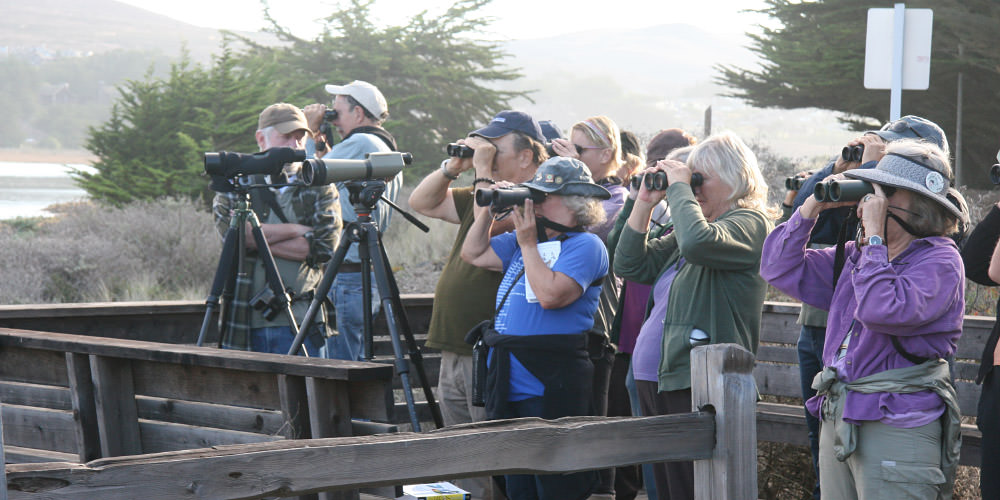
Beach Watch is a long-term shoreline monitoring project founded in October 1993 by Greater Farallones National Marine Sanctuary and is conducted in partnership with Greater Farallones Association. This year-round ecosystem assessment program is conducted by highly trained and dedicated staff and volunteers who regularly survey over 50 beaches along the shores of Greater Farallones and Monterey Bay National Marine Sanctuaries from Point Año Nuevo in San Mateo County north to Manchester Beach in Mendocino County (over 210 miles of coastline!).
Through this valuable program, data are provided to federal, state, and regional marine and estuarine natural resources agencies, providing information on the abundance and distribution of coastal birds and mammals, human activities, beach wrack relative abundance, oil pollution, and entanglement from trash and other debris. Beach Watch data is also used to inform emergency responders about grounded vessels, oil pollution events, and to assess and document the health of a beach before an incident and its recovery. Data on the status of streams and lagoons connecting the ocean to watersheds have been used to determine seasonality of salmonid restoration activities.
The goals of Beach Watch are to help protect and understand our coastal resources by:
- Creating a long-term baseline data set of human activities and live and dead bird and mammal wildlife on beaches from Manchester Beach to Point Año Nuevo;
- Assisting the sanctuary in early detection of natural or human-caused disturbances, such as oil spills; and
- Developing a network of local stewards that document and exchange information on the biological and physical changes a particular beach may undergo throughout the various seasons and over several years.
Emergency Response Readiness
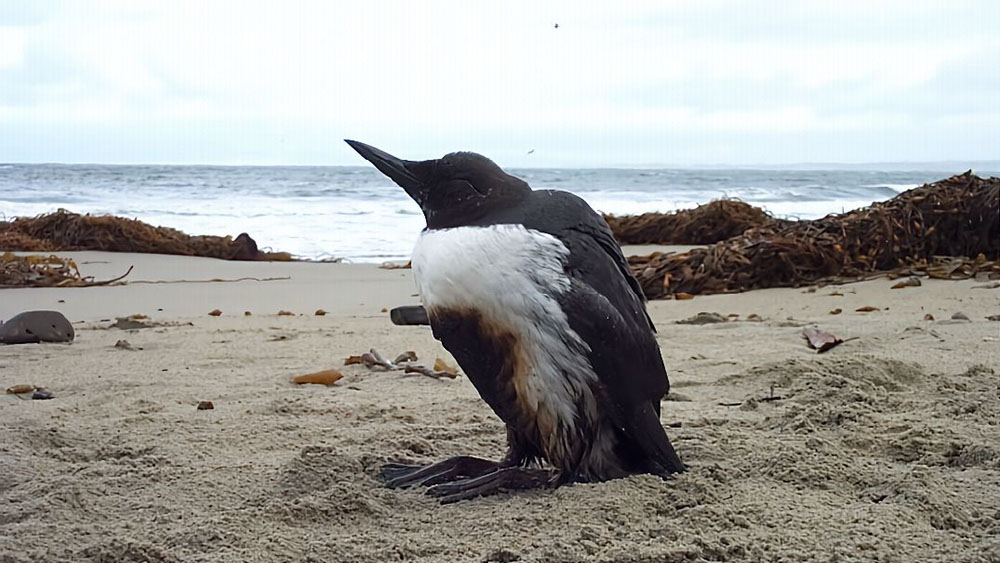
Beach Watch volunteer surveyors conduct oil spill sampling and tarball retrieval to assist the California Office of Spill Prevention and Response to detect and analyze the source of oil on coastal beaches. Pollution response agencies rely on the expertise of Beach Watch staff to know the day-to-day conditions of the coasts of Greater Farallones and Monterey Bay national marine sanctuaries. Data from Beach Watch were used to secure more than $52 million to date in restoration funds to increase protection of natural resources and enhance lost recreational uses along the Central and Northern California coasts. Beach Watch is part of the statewide MPA Watch network, by contributing human use data, which helps inform the effectiveness of California Marine Protected Area regulations.
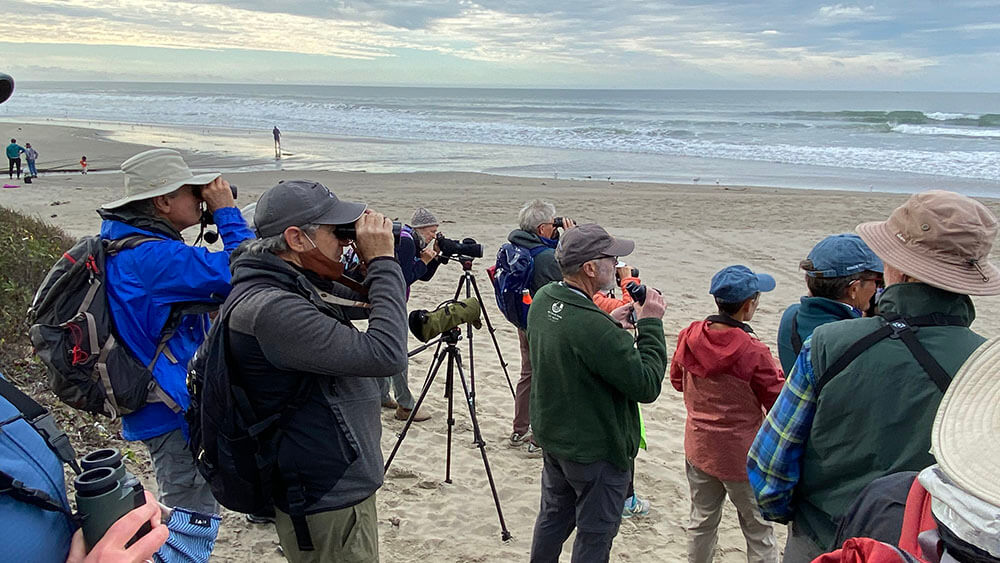
Why Look at Beaches?
Beach Watch data:
- Supports the management of numerous regional, state, and federal parks, providing a look at the natural trends and seasonality for coastal birds, mammals, and human activities — literally the natural ebb and flow of our coastal wildlife and geology.
- Helps determine how far north species are traveling beyond their normal southern ranges as ocean temperatures rise, like Guadalulpe fur seals and red-footed and brown boobies travel. Several specimens of rare and endangered wildlife have been discovered and documented by Beach Watch volunteers, including a rare Cuvier's beaked whale, a species the scientific community knows little about.
- Provides information on the erosion and deposition of beaches along our coast by photo-documenting the shoreline. This time series of beach profiles is an important part of understanding the variability of the shoreline and impacts from climate change, storms events, and sea level rise. View beach profiles and trends of the most likely species to be encountered at sanctuary beaches.
What is Beach Watch Data Used For?
The data the Beach Watch surveyors have collected have been used:
- To identify and designate wildlife protection areas
- To increase protections for threatened and endangered species
- To detect mortality events of birds and mammals
- To assess impacts from marine trash
- To assess damages from oil pollution
- In sanctuary management plan reviews, condition reports, peer-reviewed publications, California Department of Fish and Wildlife decadal review reports, and various land manager reports.
“Decades of monitoring have now established a baseline of data along the coast, Beach Watch surveyors become experts on their beaches wildlife. They learn its seasonal cycles, they also note how people use the ocean for work and for recreation.” Dr. Sylvia Earle
Explore the Data
The public has access to over 30 years of biological data from nearly 65 beaches in Northern California, in and adjacent to Greater Farallones and Monterey Bay national marine sanctuaries. Data is available through several data portals: CeNCOOS, MPA Watch, and Greater Farallones Association. The online query system allows public access to data on live birds and marine mammals, dead vertebrates, and human activities. Users can choose different filters and groupings to view the data; for example, the data can be queried for specific species, by individual beach, or for a specified date range. The data are summarized and can also be displayed in graph form. Members of the public have used this to expand their local knowledge of how marine species use a specific beach. Community members have used Beach Watch data to inform conversations with land managers, and Beach Watch volunteers use the data to expand their knowledge and skills.
The collection of Beach Watch information is authorized under the OMB Control Number included in the Paperwork Reduction Act and Privacy Act statements.
Get Involved
Volunteer recruitment and training happens every two to four years.
Volunteer requirements include:
- being able to walk across unstable ground (sand)
- an 80-hour training commitment
- a one-year commitment to survey an assigned beach
Beach Watch has an over 80% retention rate of volunteers who are committed to ongoing training and staying up to date with data collecting protocols and other pertinent information. Beach Watch staff provide constant feedback on the volunteer’s reporting of violations and the accuracy and precision of their data.
More on Beach Watch
Beach Watch online query system
Publications featuring Beach Watch Data
Seabirds as Sentinel Indicators of Ecosystem Health
Stories from the Blue: Beach Watch